Summer doesn't always ease you in. One day it's warm, the next it's 90°F before 9am and your dog is already struggling on their morning walk.
But heat doesn't just make them hot. It makes them reactive, unsettled, and harder to read for the rest of the day — and that has nothing to do with how well-trained they are.
Heat Is a Brain Event, Not Just a Body One
We tend to think about summer heat as a physical problem for dogs — panting, overheating, needing water. All of that is true. But what most pet parents don’t know is that heat also functions as a neurological stressor, quietly changing how your dog’s brain responds to the world.
When your dog gets hot, their body triggers a cortisol response — the same stress hormone that spikes during a thunderstorm or a vet visit. Studies suggest cortisol levels can rise by as much as 23% under heat stress compared to neutral conditions. That elevated cortisol primes the nervous system for reactivity, lowering the threshold for triggers that your dog would normally brush off.
In other words: the snappy, jumpy, unsettled dog you brought home from the beach isn’t misbehaving. Their stress bucket is just full.
The Cooling Problem Dogs Have (That We Don’t)
Humans sweat. It’s efficient, it’s rapid, and it keeps our core temperature regulated even in intense heat. Dogs don’t have that luxury. They rely almost entirely on panting to cool down — a mechanism that’s estimated to be four to seven times less efficient than sweating.
Once outdoor temperatures creep above 85°F, panting starts to lose the battle. In humid conditions, it barely works at all — because the air your dog is breathing in is already saturated with moisture, giving the evaporation process nowhere to go. Heat stays in the body longer, core temperature climbs, and the stress response kicks in harder.
This is why two dogs can go on the same walk on a hot day and come home with very different energy levels — breed, coat, size, and baseline nervous system sensitivity all play a role in how quickly heat tips them into stress.
5 Practical Ways to Protect Your Dog on Hot Days
The good news: once you understand heat as a neurological stressor rather than just a physical one, you can build a routine that actually helps. Here’s what works.
1. Time your walks early — and keep them short
Aim for before 8am or after 7pm in summer. Midday heat doesn’t just burn paw pads — it loads your dog’s cortisol baseline before the day has even properly started. A shorter, cooler walk does less neurological damage than a long hot one.
2. Pre-load calm before the activity, not after
If you know a hot or stimulating day is ahead — beach trip, outdoor event, car journey — give your dog calming support 30 minutes before you leave, not when you get home and they’re already wired. Supporting the nervous system proactively is significantly more effective than trying to bring it down after the fact.
3. Prioritize hydration as a stress tool
Water isn’t just about keeping cool — it directly affects cortisol regulation. Dehydrated dogs show elevated stress hormone levels even in mild temperatures. Carry a collapsible bowl, offer water every 20 minutes on hot days, and remember that a dog who stops drinking during exercise may already be in early heat stress.
4. Use the lick mat as a cool-down ritual
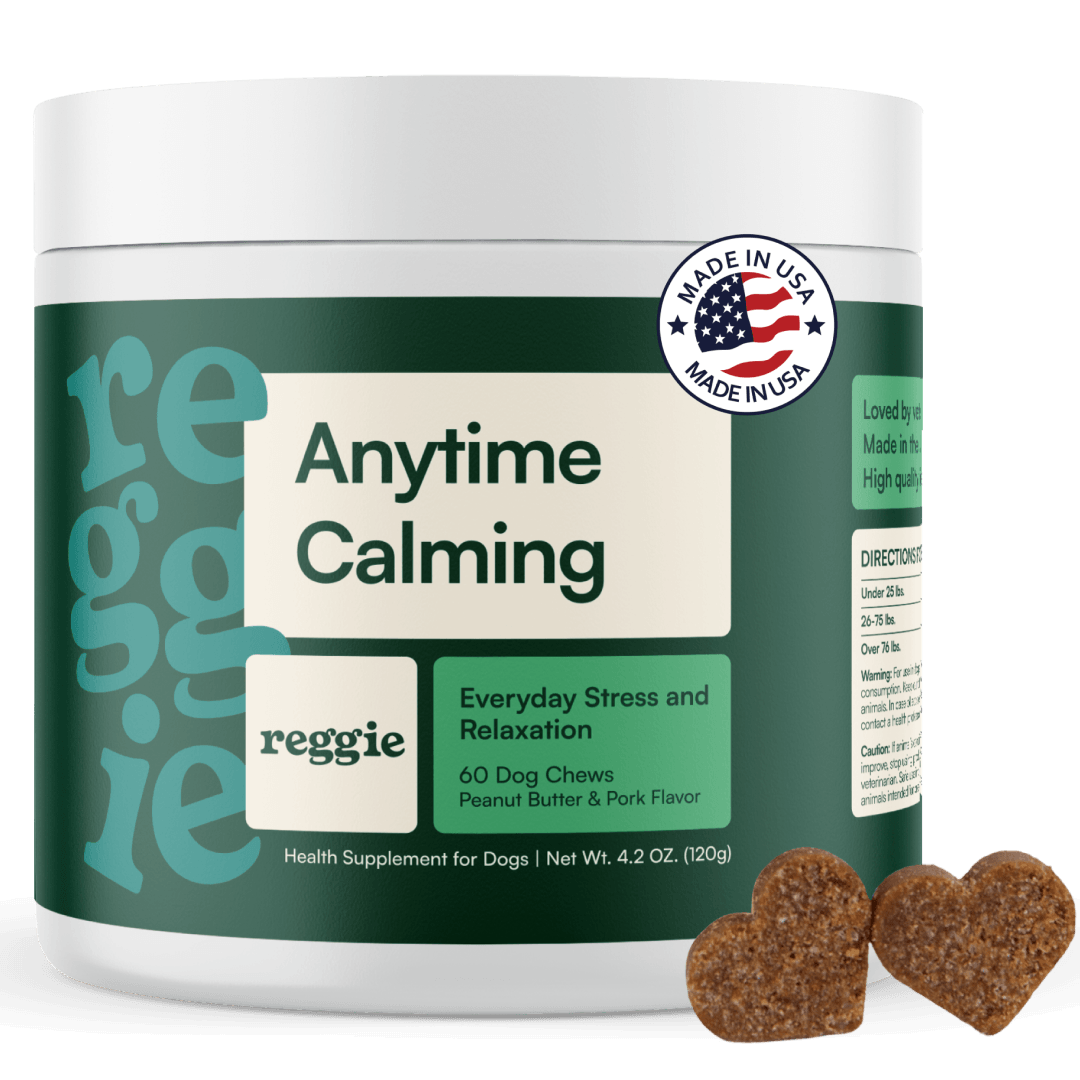
After any hot or stimulating outing, 10 minutes on a lick mat with Reggie's Anytime Calming Spread does two things at once: the repetitive licking motion activates the parasympathetic nervous system (the ‘rest and digest’ branch), and the L-Theanine in the spread begins supporting relaxed alertness within 30–45 minutes. It’s a simple ritual that tells your dog’s brain the exciting part is over.
5. Watch for the stress stack, not just one sign
Reactivity on a hot day is rarely caused by heat alone. It’s heat plus a missed nap plus a loud environment plus not quite enough water. Each stressor adds to the pile. When you see reactive behaviour in summer, ask yourself how many boxes were checked that day before you look for a ‘reason.’ Usually, there isn’t one reason — there’s a stack.
Build Your Dog’s Summer Calm Routine
Hot days are going to happen. But a dog with a well-supported nervous system handles them very differently to one running on empty. At Reggie, everything we make is designed for daily use — building a baseline of calm that holds up even when summer decides to turn the dial all the way up.